

From Excel to ERP: A Manufacturing Digital Transformation Journey
From Excel to ERP, the company streamlined core operations, integrated business and financial data, and laid a strong foundation for digital transformation.

PART 01 Customer Challenges
Traditional Management Struggles to Keep Up with Business Growth
For many manufacturing companies, an increase in orders does not necessarily translate into greater management efficiency.
One of our customers faced many of the challenges commonly encountered by growing manufacturers. Business data covering orders, procurement, production, inventory, shipments, finance, and other operations was scattered across multiple Excel files and managed through shared folders. This resulted in version inconsistencies, a high risk of accidental data modification, and heavy reliance on individual experience.

At the same time, to avoid delays in delivery, the company had long adopted a “better to keep extra materials on hand” approach to secure production. This resulted in a high level of capital tied up in inventory.
When customers changed delivery schedules or placed small-batch orders, production plans also had to be adjusted manually and frequently, consuming significant time. In addition to low efficiency, inconsistent data standards across different departments made management even more difficult.
As the business continued to expand, the existing management model could no longer support sustainable growth. Digital transformation had become an urgent necessity.
PART 02 Solution
Starting with a Digital Assessment to Define the Transformation Roadmap
Based on the company's current situation, we first conducted a comprehensive digital assessment. We systematically reviewed existing business processes, data management practices, and cross-department collaboration, and developed a digital improvement roadmap aligned with the company's future growth strategy.
This allowed us to clearly define the priorities and implementation focus for each stage of the transformation.
During the ERP selection phase, we supported the customer in conducting feasibility analysis and product research. Solutions were evaluated from multiple perspectives, including business fit, return on investment, implementation complexity, and future scalability.
Ultimately, an ERP solution suited to the company's long-term development was selected.

Deep Involvement in Implementation, Bringing Core Operations onto One Platform
Throughout the implementation, we were deeply involved in requirements analysis, solution design, system configuration, testing and validation, data migration, end-user training, and report development. We also managed project progress and deliverables throughout the entire implementation lifecycle.
Through the system implementation, core operations—including order management, procurement, production, subcontracting, quality management, inventory, and finance—were gradually brought onto a unified platform.
Data that had previously been scattered across different Excel files and departments could now be centrally managed.
Improving Production Reporting Efficiency with a Dedicated Reporting System
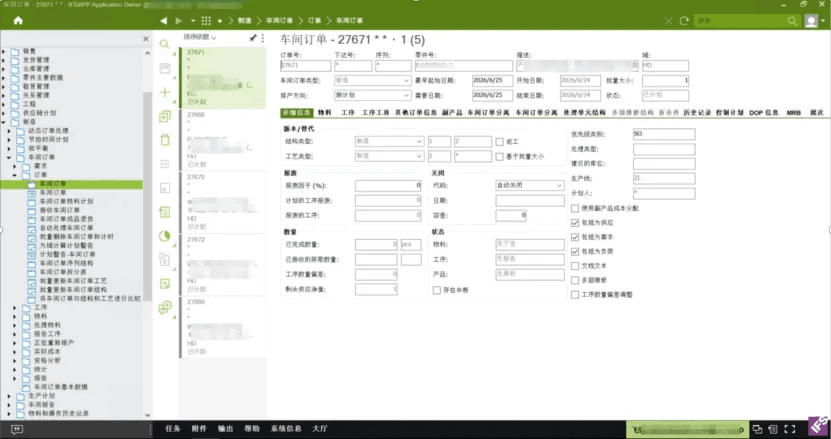
To address the low efficiency of production reporting on the shop floor, we developed a production reporting system based on the ERP platform.
Frontline employees can now enter production data in a timely manner, reducing manual data collection and repetitive consolidation work while improving both reporting efficiency and data accuracy.
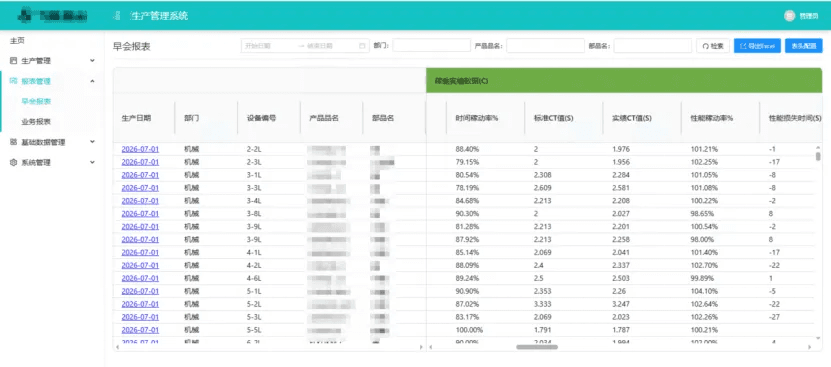
Flexible Production Forms with JasperReports
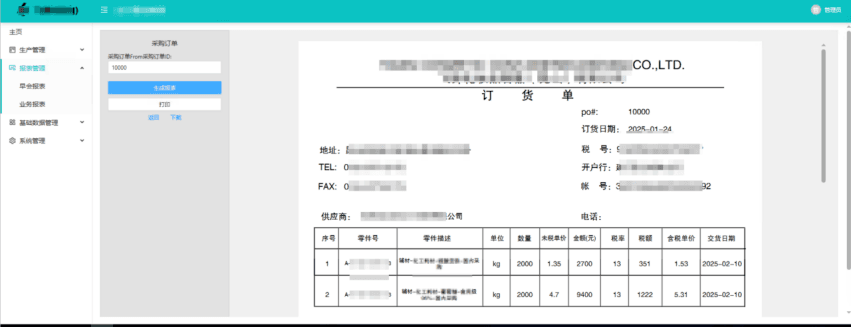
In addition, based on the company's production management requirements, we used the open-source reporting tool JasperReports to develop production document printing functionality.
The solution allows the company to quickly adjust document formats according to actual business scenarios. This not only meets the needs of production sites but also reduces investment in commercial reporting tool licenses, further improving the project's overall return on investment (ROI).
“Standardize First, Systemize Second” to Reduce Go-Live Risks
To ensure a smooth system launch, we followed the implementation principle of “standardize first, systemize second.”
Before configuring the system, we standardized business processes, master data, and coding rules. We also conducted multiple rounds of system testing and data migration rehearsals to identify and resolve issues related to business process integration and data accuracy in advance, minimizing the risks associated with system migration.
At the same time, we developed key users within each department and leveraged them to drive adoption across the organization.
During the initial system launch, we also provided on-site support to help employees quickly adapt to the new way of working and ensure a smooth transition from the legacy system to the new system without disrupting production and daily operations.
PART 03 Implementation Results
Connecting Business and Finance to Build a Strong Digital Foundation
Following the implementation and continuous optimization of the ERP system, the company achieved unified management of core operations including orders, procurement, production, subcontracting, quality management, inventory, and finance.
By connecting operational and financial data, the company achieved integrated business and financial management, establishing a stronger foundation for digital operations.
After the system went live, operational efficiency improved significantly:
- Financial month-end closing and report preparation workload was reduced to approximately 30% of the previous level, significantly reducing manual data consolidation.
- The month-end closing cycle was shortened from more than 10 days to just 3 days, substantially improving financial processing efficiency.
- The number of Excel reports was reduced from more than 70 to 27, lowering the cost of repetitive data aggregation and maintenance.
- Business departments no longer need to separately compile financial data. Data generated by the system can be directly used for financial analysis and business management.
At the same time, the timeliness and accuracy of production reporting data were improved, while inventory management became more standardized.
The new digital foundation also enables the company to further explore initiatives such as barcode management, QR-code traceability, intelligent production scheduling, and AI applications.

ERP Is Not the Destination—It Is the Starting Point for Digital Transformation
For manufacturing companies that still rely heavily on Excel for business management, ERP implementation is more than a system upgrade. It is an opportunity to optimize the way the business is managed and operated.
By establishing a unified data platform, standardizing business processes, and enabling data sharing across departments, companies can reduce operational costs, improve management efficiency, and gradually move toward a smarter and more refined model of production and operations.